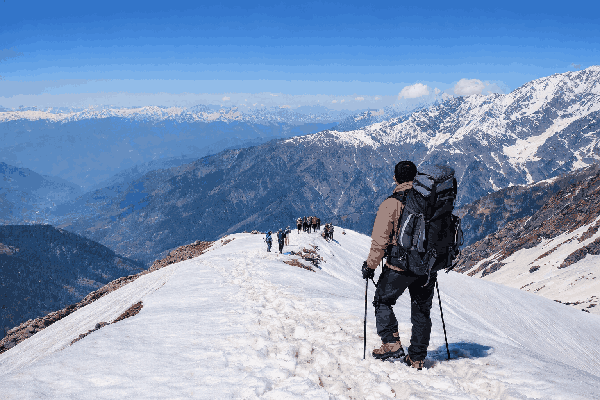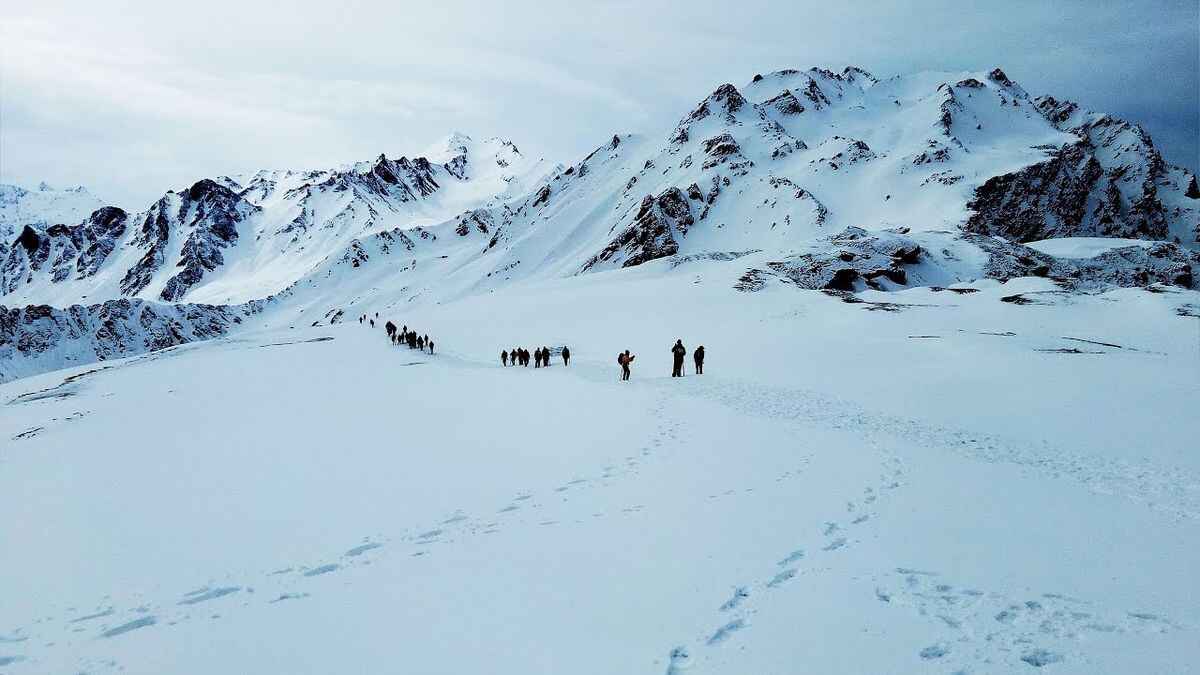
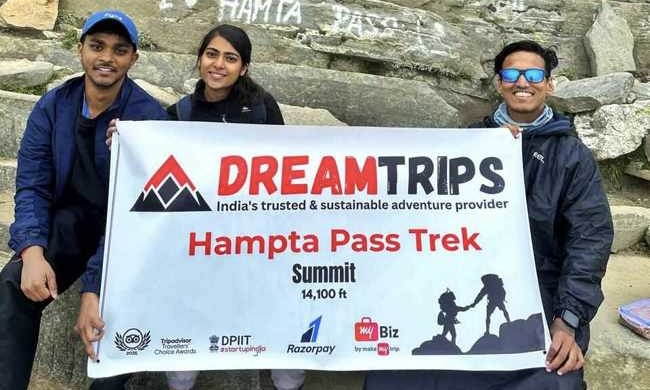
How Each Day of the Sar Pass Trek Looks Like
The Sar Pass trek isn’t just a trail through the mountains — it feels like a slow unfolding of the Himalayas, one landscape at a time. You start in the humming cafés of Kasol, where the smell of fresh coffee mixes with pine, and end days later in the silent meadows of Biskeri, where the only sound is the wind brushing past distant snowfields.
▸ Every day on this journey feels different.
▸ Every turn feels like a new world.
▸ Every campsite has its own mood — from forest warmth to high-altitude silence.
This is the kind of trek where you begin as a visitor and return feeling like you belonged to the mountains all along. And the beauty of the Sar Pass trek is not just reaching the pass — it’s how each day slowly shifts the terrain under your feet, from dense forests to snowy ridgelines.
If you’re planning this adventure or simply want to know what each day looks like, this detailed story-style itinerary will walk you through the experience — step by step, moment by moment.
Overview: What is the Sar Pass Trek?
▸ Sar Pass is a classic Himalayan trek located in the Parvati Valley of Himachal Pradesh, beginning from Kasol and ending at Barshaini.
▸ Maximum altitude: ~13,800 ft
▸ Duration: 4 nights / 5 days of trekking
▸ Region: Parvati Valley, Kullu District
▸ Difficulty: Moderate
▸ Highlights: Forest trails, alpine meadows, snowfields, a high mountain pass, long snow slides, and breathtaking ridges.
Why is Sar Pass so popular?
Because it offers snow, forests, meadows, rivers, ridgelines, slides, and views — everything a beginner-to-intermediate trekker hopes for — in one perfectly structured journey.
Click here to detailed pricing and information
DAY-WISE EXPERIENCE – What Each Day Actually Feels Like
Below is the complete, detailed breakdown of every day from Kasol to Barshaini — exactly how a trekker experiences it.
Day 1: Kasol → Grahan Village
Into the Heart of the Parvati Valley
▸ Distance: 9–10 km
▸ Duration: 5–7 hours
▸ Altitude: 5,000 ft → 7,700 ft
What the day feels like
Your day begins in Kasol, with the warmth of cafés and the sound of the Parvati River echoing through the valley. As you leave the village behind, the trail instantly shifts into a quiet forest path. The sunlight filters through thick pine branches, and the first 3 km feel surprisingly gentle — more like a morning walk than a trek.
But soon, the trail tightens, the forest grows deeper, and the sound of the river fades into the distance.
Elevation gain & Trail Difficulty
▸ 0 to 3 km: Flat, riverbank walk, gradient 0–5°
▸ 3 to 7 km: Steady uphill, forest path, gradient 5–12°
▸ 7 to 9 km: Rocky ascent into Grahan, gradient 15–18%
Difficulty: Low but the final push is steep.
Terrain & Navigation Experience
▸ Trail stays on true left of Grahan Nallah.
▸ Intermittent wooden bridge crossings.
▸ Wide dirt paths gradually turn into narrow stone steps.
▸ Final ascent opens into a ridge dotted with apple trees.
▸ You’ll know you're close when you spot bright tarpaulin stalls selling juice, tea, and omelettes.
Campsite vibe at Grahan
▸ Village-style setting
▸ Surrounded by terraced fields
▸ Forest-backed ridge
▸ Evenings are peaceful, cool, and starry
What to expect emotionally
▸ First real Himalayan forest walk
▸ Sense of climbing steadily away from civilization
▸ Grahan village feels warm, rustic, welcoming
Day 2: Grahan → Min Thach
The Forest Opens Into Meadows
Distance: 7 km
Duration: 5 to 6 hours
Altitude: 7,700 ft → 11,150 ft
What the day feels like
Day 2 is where you begin to understand the rhythm of the Himalayas. The trail rises continuously, winding through deep pine forests where the sunlight barely reaches the ground. You can feel the altitude kicking in — your breath deepens, your pace slows, and the silence of the woods surrounds you completely.
And then, suddenly…
The trees open up.
A sweeping meadow unfolds in front of you.
This is Min Thach — your first real alpine ridge.
Elevation Gain & Difficulty
▸ Average gradient 7–14%
▸ Short steep sections at 15–22%
▸ Difficulty: Moderate
Terrain Experience
▸ Stone steps → dense conifer canopy → narrow single-track trails
▸ Thicker forest = quieter trail, softer mud
▸ Final 20–30 minutes: ridge walk with open views
▸ Meadows appear dramatically after hours of darkness under trees
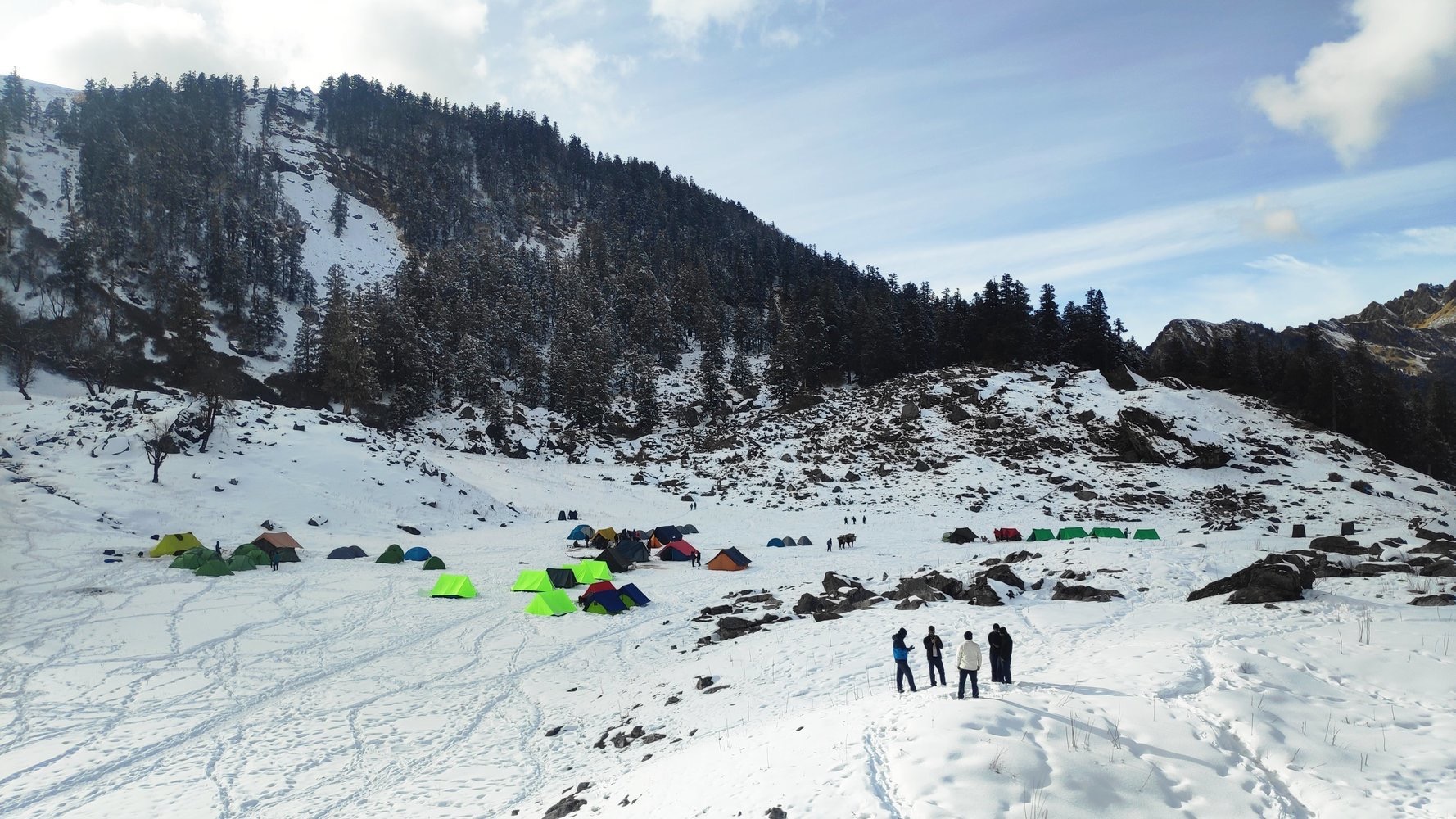
Campsite vibe at Min Thach
▸ Wind-swept grassy ridge
▸ Clear views of horizon ranges
▸ Occasional spring-line or vendor tents
▸ Evenings are colder and breezier than Grahan
What to expect emotionally
▸ First real altitude effect
▸ Powerful forest silence
▸ The excitement of reaching your first true meadow camp
Day 3: Min Thach → Nagaru
The Climb to the Highest Campsite
Distance: 6 to 8 km
Duration: 4 to 6 hours
Altitude: 11,150 ft → 12,450 ft
What the day feels like
This is the day everything begins to feel real. You start in meadows, enter shadowed forests again, and climb steadily until the tree line ends abruptly. From here onwards, it’s raw mountain terrain — windy ridgelines, snow patches (April–May), and views that look almost unreal.
Nagaru is one of the most dramatic campsites in the Sar Pass trek — perched right on a high ridge, staring directly at the snow-clad ranges of Parvati Valley.
Elevation Gain & Difficulty
▸ Mixed gradient: gentle → steep → very steep
▸ 6–25% on short sections
▸ Difficulty: Moderate to Difficult (snow-dependent)
Terrain Experience
▸ Never take the “obvious ridge path” — that’s an animal trail
▸ Trail goes southward into safe forest lines
▸ Rocky ridge emerges after forest
▸ In April/May, patches of hard snow appear
▸ Final climb to Nagaru is windy, exposed, and tiring
Campsite vibe at Nagaru
▸ Cliff-edge location
▸ Extremely cold nights
▸ Himalayan panorama visible right from tents
▸ Strong winds — sound of flapping tents all night
What to expect emotionally
▸ Real high-altitude thrill
▸ First time you realize you're above all forests
▸ A feeling of being surrounded entirely by bigger peaks
Day 4: Nagaru → Sar Pass → Biskeri Thach
The Summit Day — Snowfields, Slides & Epic Views
Distance: 13 to 14 km
Duration: 6 to 9 hours
Altitude: 12,450 ft → 13,800 ft → 11,000 ft
What the day feels like
This is the day.
The one everyone prepares for.
The one that stays in your memory forever.
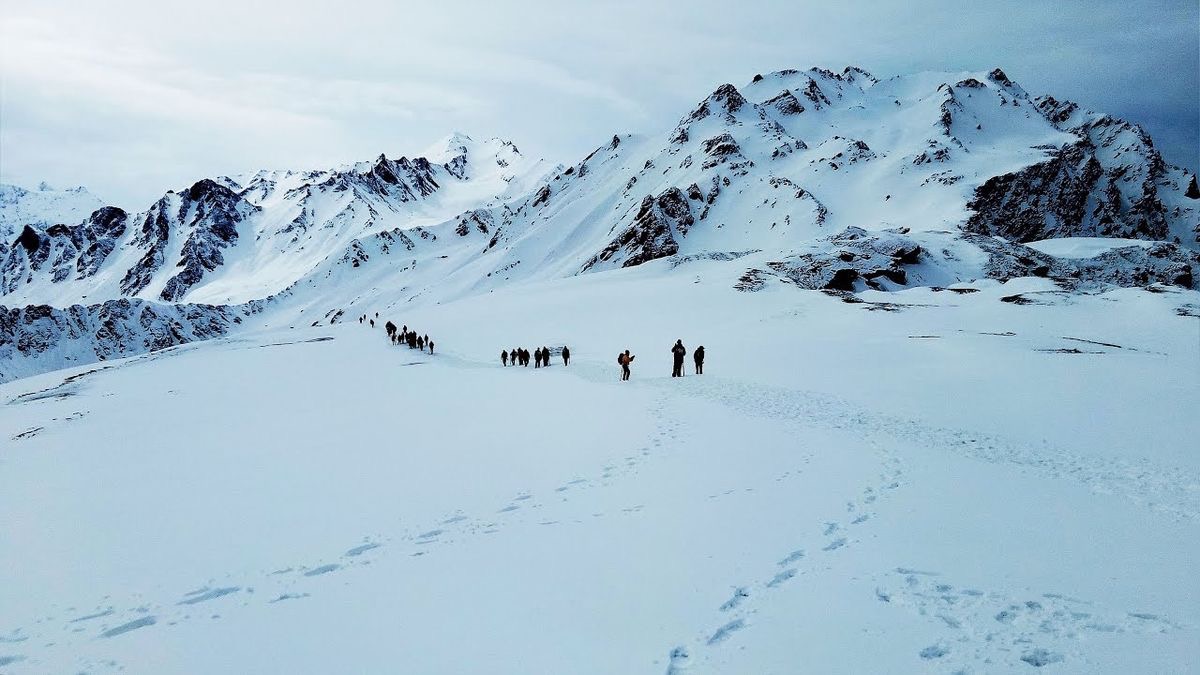
You start before sunrise. The snow is crisp, the wind sharp, and your headlamp beams bounce off the white slopes ahead. The trail climbs steadily, crossing false ridges until finally — the mountains open into an enormous white bowl.
This is Sar Pass, the vast snowfield at nearly 14,000 ft.
There’s a stillness here that can’t be described.
You stand on a world of endless white surrounded by towering silent peaks.
Then comes the famous part — the snow slide.
Long, smooth, thrilling, and unbelievably fun.
Elevation Gain & Difficulty
▸ Ascent gradient: 15–30%
▸ Long snowy sections
▸ Descent: steep snow slide → soft meadows
▸ Difficulty: Difficult
Terrain Experience
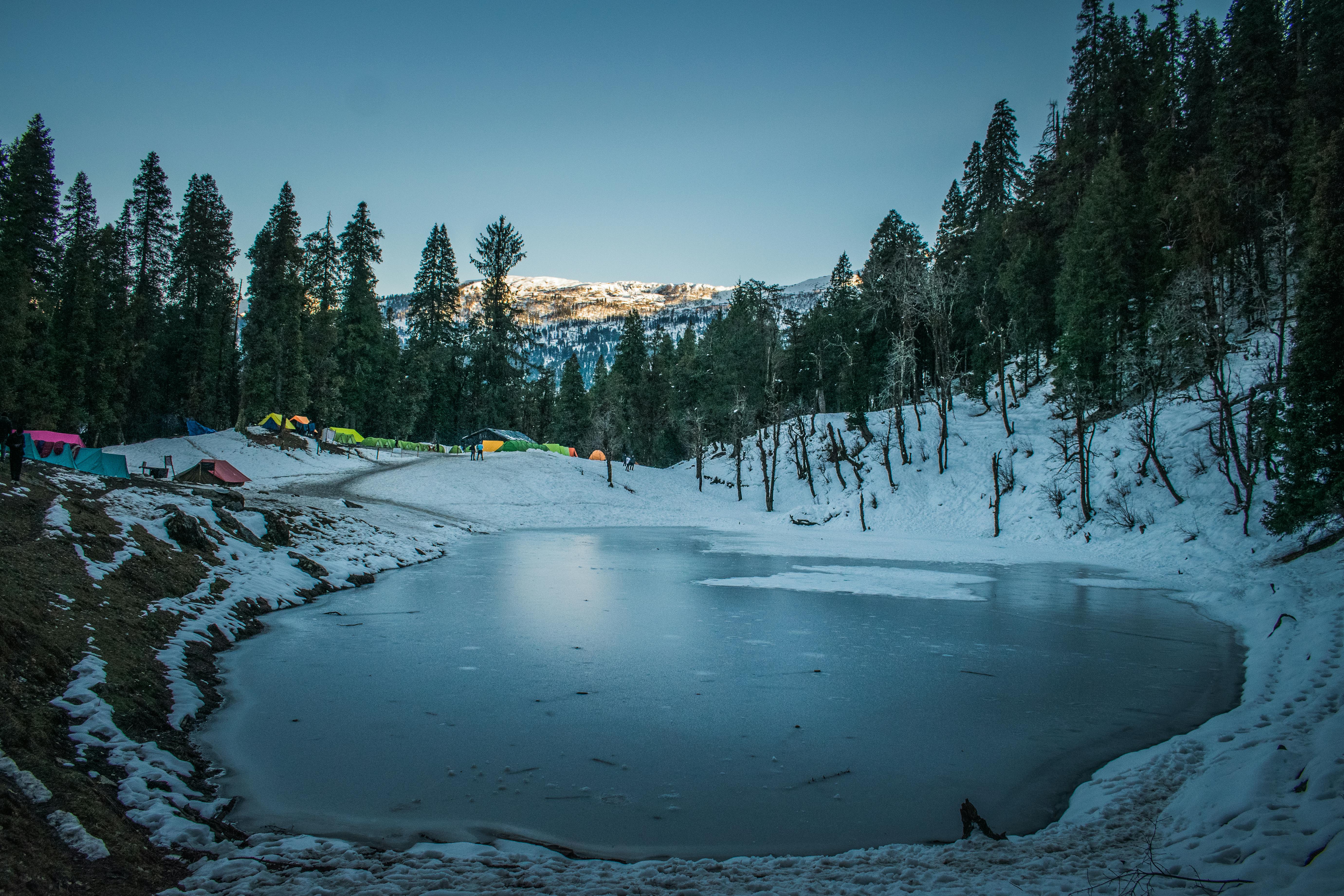
▸ Frozen pond (“Sar”) may be buried under snow
▸ Navigation relies on ridge structure, not visible trails
▸ Long snow chute descent
▸ Lower valley opens into pine-fringed meadow of Biskeri
Campsite vibe at Biskeri Thach
▸ Wide green bowl
▸ Water streams running nearby
▸ Pine forests at the lower edges
▸ Much warmer than Nagaru
What to expect emotionally
▸ Peak Himalayan beauty
▸ Most dramatic sunrise of the trek
▸ Exhilaration after descent
▸ Feeling of achievement as you reach Biskeri
Day 5: Biskeri → Barshaini → Drive to Kasol
Back to Civilization
Distance: 8 to 10 km
Duration: 4–6 hours
Altitude: 11,000 ft → 7,800 ft
What the day feels like
The final day is a complete switch in landscape. You leave wide meadows and descend into thick forests again. The trail is steep in parts, passes through wooden house clusters, crosses small bridges, and eventually leads you to the village of Pulga/Tulga.
A final bridge over the dammed Parvati River brings you to Barshaini, the end point of the Sar Pass trail.
And soon… the road returns.
The cafes come back.
Kasol appears again — familiar but somehow different now.
Terrain Experience
▸ Steep forest descent
▸ Rope/rappel section (6–8 m)
▸ Multiple stream crossings
▸ Dense woodland with branching trails
▸ Final motorable road from Barshaini
What to expect emotionally
▸ A huge sense of completion
▸ Forest nostalgia
▸ And the realisation that the mountains have quietly changed you
Why Choose Dream Trips?
✅ Experienced & certified trek leaders
✅ Safety-first operations
✅ Budget-friendly & accessible
✅ Supportive team and guidance
✅ Responsible trekking focus
✅ Real Himalayan access since 2019
Best Time to Do the Sar Pass Trek
The best time to do the Sar Pass trek is from mid-April to early June, when the Parvati Valley begins to open after winter and the higher slopes are still covered in shimmering snow. Each month offers a slightly different experience.
▸ April marks the start of the trekking season. The forests around Grahan and Min Thach come alive after winter, but the upper sections around Nagaru and Sar Pass still have hard, compact snow. Temperatures remain cold, especially at night, and early morning snow can feel icy. April is ideal if you want a more challenging, winter-like feel with crisp snow and fewer crowds.
▸ May is widely considered the best month for the Sar Pass trek. The lower altitude trails become warmer and greener, the meadows are pleasant to walk through, and the snow on the upper slopes becomes more stable and easier to climb. The famous Sar Pass snow slide is at its best in May — long, soft, and incredibly fun. Weather windows are stable, making summit day safer and more predictable.
▸ June brings milder mornings and warmer days. Snow begins to melt, especially toward the end of the month, creating a mix of white slopes and exposed brown patches. The meadows around Biskeri Thach turn lush and vibrant. June is perfect for trekkers who prefer gentler cold, softer snow, and more comfortable evenings at the campsites.
Overall, April offers adventure, May brings the perfect balance, and June gives the most pleasant temperatures. No matter which month you choose, the Sar Pass trek delivers stunning landscapes, clear views, and an unforgettable Himalayan experience.
Difficulty Level & Fitness Requirements
▸ Moderate difficulty
▸ Requires stamina for long ascents and descents
▸ Good lung capacity and leg strength recommended
▸ No technical mountaineering needed
Detailed guide to help you prepare for Sar Pass trek
Weather Conditions by Month
▸ April: -2°C to 10°C
▸ May: 0°C to 12°C
▸ June: 4°C to 18°C
Nights at Nagaru often fall below freezing.
How to Reach Kasol (Starting Point)
▸ By Air: Bhuntar Airport → 31 km from Kasol
▸ By Road: Direct buses from Delhi/Chandigarh → Bhuntar → Kasol
▸ By Train: Nearest major station: Chandigarh
Local Culture, Flora & Fauna
▸ Grahan: old Himachali village with wooden homes
▸ Forests: pine, deodar, oak
▸ Meadows: wildflowers May–June
▸ Wildlife: Himalayan birds, occasional fox sightings
▸ Locals: warm, simple, helpful
Essential Things to Carry
▸ Good trekking shoes
▸ 2–3 layers for cold
▸ Down jacket for Nagaru
▸ Trek pole
▸ Gloves + cap
▸ Rain gear
▸ 1L + 1L bottles (hot & cold water)
▸ Energy snacks
▸ Sunglasses (for snow glare)
Trekking gears for every budget
Accommodation & Food Details
▸ Standard trek tents
▸ Forest camps → ridgeline camps → snow camps
▸ Basic vegetarian meals served throughout
▸ Hot water available at camps in mornings and evenings
FAQs
1. Is Sar Pass good for beginners?
▸ Yes, with basic fitness.
2. Will there be snow?
▸ Yes — April to mid-June.
3. How long is the trek?
▸ 4 nights, 5 days.
4. Do we need technical skills?
▸ No, but basic snow awareness helps.
5. What is the best month for Sar Pass?
▸ April to May is considered the best
6. How high is Sar Pass?
▸ Around 13,800 ft.
7. Are there washrooms?
▸ Dry toilets at campsites.
8. Is altitude sickness common?
▸ Possible at Nagaru — hydration + pacing is key.
Conclusion
The Sar Pass trek is not just a journey from Kasol to Barshaini — it’s a slow awakening into the world of the Himalayas. Each day brings new terrain, new emotions, and new challenges. From pine forests to snowfields, from warm villages to icy ridges — Sar Pass gives you everything the mountains can offer in one trek.
If you’re looking for a trek that changes you, challenges you, and rewards you beyond expectation — Sar Pass might just be the one.
Dream Trips has been curating real Himalayan trekking experiences since 2019.
Click here to book your Sar Pass Trek
Sar Pass trek guide part I
Sar Pass trek guide part II
A Complete Local Expert Insight by Dream Trips
Explore more trek